Our approach
We start where most services stop — the end.
TakeAYear is a gap-year design firm, not a program-matching service. We don’t ask which programs you’d like to do. We ask where you want to be in two years — university, a career, something you’re building, or finally some clarity — and design the year backward from there.
What we believe
Why design beats matching
Anyone can hand you a list of programs. The hard part — and the whole point — is judgment about what a specific person needs, in what order, at what intensity. That judgment is the product.
A year is a development program, not a trip
A well-designed gap year isn’t a collection of cool experiences. Every experience earns its place because it builds a specific competency you’ll need next — chosen on purpose, sequenced on purpose.
Outcomes over experiences
The value of a year isn’t the places you go. It’s who you become and what you can do when you come back. We design for that, then choose experiences to match.
Structure, with room to breathe
Tight enough that you don’t waste the year, loose enough that you actually learn. We expect things to go sideways — we plan for it, and we treat the disruption as part of the curriculum.
Independence, not dependence
Our job is to design the plan and build your ability to run it — then step back. You should leave more capable of figuring things out alone, not more reliant on us.
The framework
Twelve competencies. One instrument.
This is the instrument behind every Gap Year Design Document. We assess where a student starts across all twelve, decide which ones the year needs to move, and choose every experience for what it builds — nothing earns its place by being impressive.
Independence
Can operate alone in the world.
Self-reliance
Makes decisions and handles logistics — transport, housing, admin — without needing rescue.
Financial management
Lives on a budget in an unfamiliar place, tracks spending, and doesn’t run out in month four.
Judgment
Reads situations correctly. Knows the line between calculated discomfort and genuine danger.
Direction
Knows where they’re going, and why.
Self-awareness
Understands their own strengths, blind spots, how they work best — and what genuinely excites them.
Chosen path
Has a real, tested answer to “why this next step?” — including at least one work hypothesis tried in the real world.
Self-directed learning
Pursues knowledge without being assigned it, and can work deeply on it for weeks with no imposed structure.
Connection
Builds real relationships anywhere.
Making friends from scratch
Builds real friendships in new places, with no school or team to do the work for them.
Social confidence
At ease with strangers. Can walk into a room of unknown people and not freeze.
Communication & story
Can articulate ideas to adults, tell their own story compellingly, and build relationships that last.
Resilience
Holds up when plans don’t.
Adaptability under pressure
Pivots when plans collapse and treats disruption as data. Recovers from setbacks — with the evidence to prove it.
Intercultural fluency
Genuinely comfortable across difference. Curious rather than threatened by it.
Wellbeing foundations
Builds the habits — sleep, movement, reflection — that hold up away from home.
The mapping
The framework is fixed. The weighting is yours.
A custom plan doesn’t mean a different list — it means a different priority order. Pick a destination and watch which competencies the year gets built to move first.
Independence
Self-reliance
Financial management
Judgment
Direction
Self-awareness
Chosen path
PriorityA program picked for tested reasons survives the February slump. A default doesn’t.
Self-directed learning
PriorityLectures don’t chase you. First year rewards students who can run their own learning.
Connection
Making friends from scratch
PriorityResidence resets your social world to zero. This is the skill that decides year one.
Social confidence
Communication & story
Resilience
Adaptability under pressure
Intercultural fluency
Wellbeing foundations
PriorityThe habits that hold up when no one is checking — built before they’re needed.
Every competency stays on the table — but each destination changes which ones the year is built to move first. Your plan weights them against where you are today.
What you actually receive
The assessment, on paper
Every engagement opens with a competency assessment — where the student starts, which competencies are priority targets, and why. Here’s what that page of the Design Document looks like.
The example is illustrative — we don’t share real student assessments.
Gap Year Design Document · Section 1
Competency Assessment
Student A · 18 · deferring entry to Queen’s Commerce
01 · Independence
Self-reliance
Financial management
Judgment
02 · Direction
Self-awareness
Chosen pathPriority target
Commerce chosen on family precedent, not evidence. The year tests two work hypotheses before day one.
Self-directed learningPriority target
Strong student — but every system so far was built by a school. Months 1–3 remove that scaffolding.
03 · Connection
Making friends from scratchPriority target
Same friend group since grade school. The plan opens with a cohort program, then deliberately removes it.
Social confidence
Communication & story
04 · Resilience
Adaptability under pressure
Intercultural fluency
Wellbeing foundationsPriority target
Habits currently held up by home routine. Rebuilt deliberately in month one, away from it.
This assessment opens every Gap Year Design Document — and is re-scored at re-entry, so the year’s growth is measured, not assumed.
Why our recommendations are better
We don’t pull from a database
Most gap-year services recommend from the same searchable lists you could find yourself. Our knowledge comes from three places — and it gets better over time.
Lived experience
We’ve been to these places and done versions of these experiences. We know what’s genuinely worth it and what only looks good on a website.
Continuous research
We track what’s actually good in each location right now — real reviews, real costs, what’s changed. Not a static program database.
A feedback loop that compounds
Every student we work with adds to what we know — what worked, what didn’t, what surprised them. Our judgment gets sharper over time.
Who designs your year
Built by two people who’ve done it
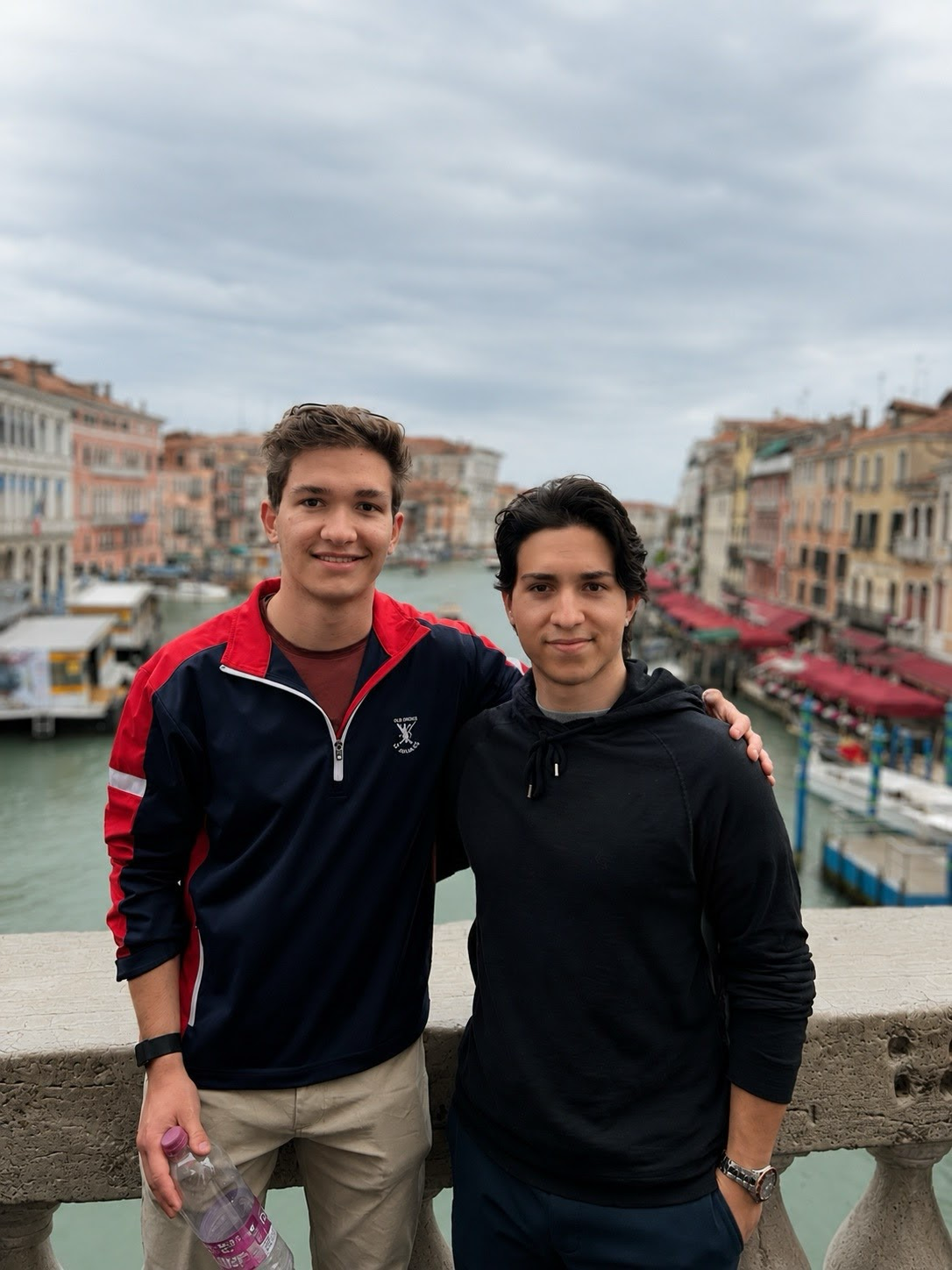
We’re twins who work together because we’re good at different things — and we both remember exactly what it feels like to be where you are now.

Max Weir
Co-founder · Structure & logistics
Max ran his own designed gap year before it had a name: a language school in Annecy, a season as a ski instructor at Whistler (promoted to Level Captain), and two months across New Zealand and Australia. He now studies business at the Lazaridis School (Laurier) and has interned at BCG — proof that a deliberate year sets you up rather than sets you back. He owns the structure side: sequencing, timing, budgets, and making the plan survive contact with the real world.

Luke Weir
Co-founder · Exploration & judgment
Luke took a gap year and a study abroad, and has spent years helping friends and peers make the most of unstructured time. He has a sharp instinct for what experiences actually produce growth versus what just looks impressive. He owns the exploratory side: scoping what’s possible, surfacing the non-obvious opportunities, and helping students work out what they genuinely want from the year.
Where we are
We’re a new firm, and we’re building our track record deliberately — one designed year at a time.
We won’t pretend to have a wall of testimonials we haven’t earned yet. What we bring is a method, genuine on-the-ground knowledge, and the kind of attention that only comes from taking very few students at once.
Begin with the end in mind
Let’s talk about where you’re headed
A free 30-minute call. We’ll tell you honestly whether a designed gap year is the right move — and whether we’re the right people to build it.